Episode Transcript
[00:00:01] Hello everyone and welcome to the Hunker Down Guide podcast.
[00:00:06] And I'm your host, Jamie Robe. And I am happy to be here to talk about one of my favorite subjects, hurricane preparedness.
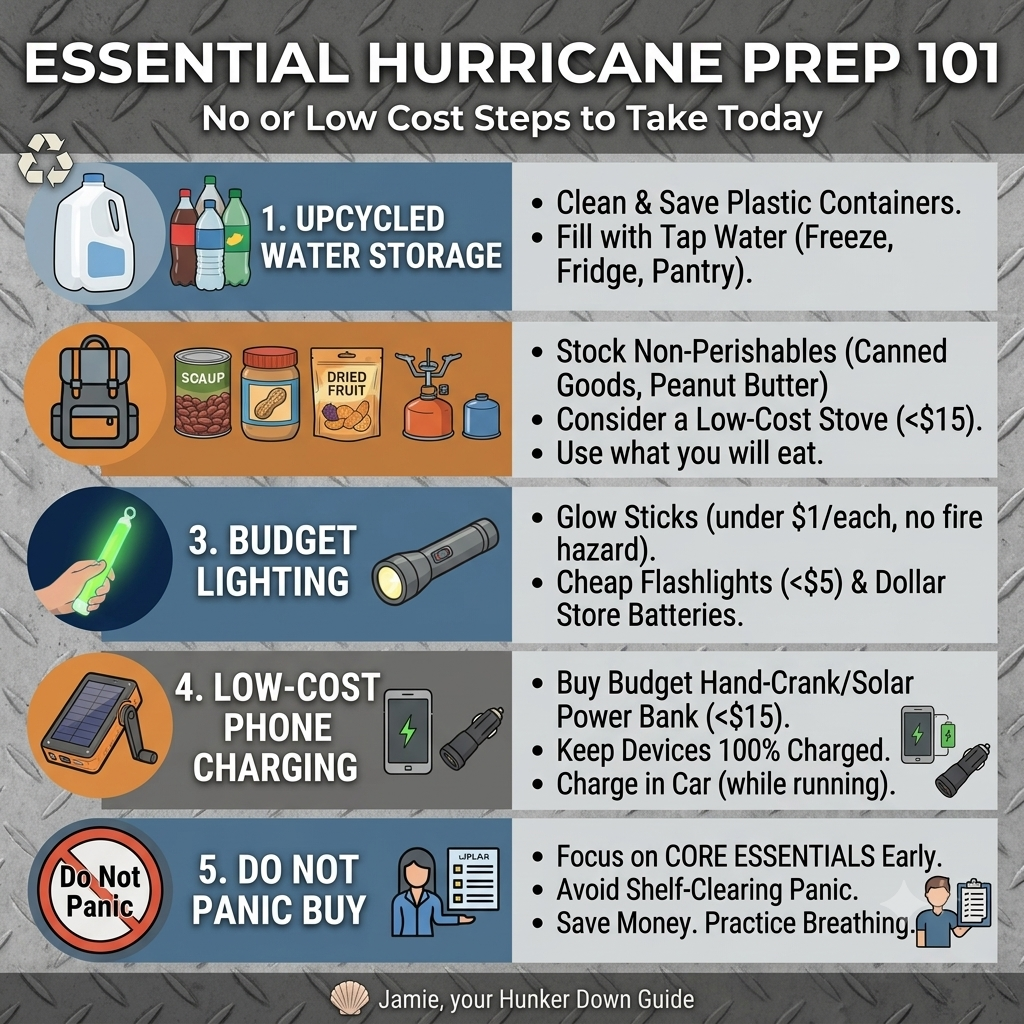
[00:00:15] In today's episode, we're going to talk about five no and low cost prep steps for hurricane preparedness and who doesn't want to save money. I definitely am always looking for coupons and, and ways to save money, DIY projects, you name it. Anyone that knows me knows that's the truth. And hurricane preparedness, I've done this for decades and I've always done DIY every way I can on it.
[00:00:46] And I had an interesting discussion with someone randomly yesterday and she was talking about, you know, how bad it is that people spend so much money on, you know, buying food and things that they, they end up not using because they're, maybe they're scared about the storm coming in and something like that. And that's, that is one, one of my themes is to avoid panic decision making and panic buying at all costs.
[00:01:16] And you, you also know I, I have the website hunkerdownguy.com where I have a lot of free information out there. I also wrote a book about the subject. So I've spent a lot of time thinking about this and doing this for many years and I distilled down five steps that we're going to talk about today.
[00:01:36] And this is on the website as a post from this, from this episode. So if you want to come over to the hunkeredownguide.com website and look at this, you're welcome to at any time. And I also have a free PDF you can download that has a little checklist in it. So try to make something that's succinct and covers essential items here. So if you are worried about hurricane preparedness but don't have a lot of money, let's just go through this together and you know, get some ideas and maybe some of this is something you can implement yourself just with the trip to the dollar store or just looking through your own home, what you already have.
[00:02:23] So it is very easy to get started. And number one that we're going to talk about is water storage. Okay, so the essential items that you have to have, number one is you have to have clean drinking water.
[00:02:41] Now you're like, oh, a tropical storm hurricane dumps tons of water. What are you talking about? Well, you know what happens a lot of times in our family's experience is trees fall down on the wires, poles get knocked down, whatever the power grid goes down.
[00:03:02] And a couple of years ago, we went through Milton, Hurricane Milton here in the Tampa Bay area. And we. It was amazing how much of the area was without electricity. Now our particular street was out for six days, and that was quite a challenge, even with all my preparations. I mean, we were, we were boiling water, we were, we were tapping down on our stored water.
[00:03:29] So I know what it's like to, to have to go through this. And, and water is a very important thing because when you lose power, especially along the tropical or subtropical areas of this country, it is very hot and humid after hurricane, and your air conditioning isn't working, so you're drinking a lot of fluids. And so you got to have that water supply. And so, you know, everyone's thinking, I got to buy big tons of water and store it and everything else. And, you know, yeah, you can do that. And it's not super expensive. But if you're really on a budget, the thing to do is to collect all of your water bottles, your little, little, you know, disposable bottles of water that you get all the time. Coke bottles, soda drinks, and even your pots and pans and clean them out, you know, wash them out with. With warm water and soap and do this well ahead. You can do this all months, all year, and collect a whole bunch of these containers. Don't fill them up, though. Keep them somewhere, you know, put the lids on, keep them somewhere safe.
[00:04:43] And then when you need to, like, if there's some kind of a pending storm coming in, then get out your bottles, fill them up with tap water, seal them up as best you can, and put them in a cool, dark place. Now, one of the tips I like is to put it in. Put some of these bottles into your freezer, okay? Now, don't fill them all the way to the top because they can, they can burst. But if you put some in the freezer, number one, it'll keep it for quite a while. But it'll also help keep your, your food in there colder, longer because there's some ice. You know, if the power goes out, you, your, your refrigerator and refrigerator and your freezer are both going to go out and your food will start to. To rapidly deteriorate in there. So think of it as kind of like ice chest thing. And also think about it like, if you're two days later and you still have some coolness to that water, even in that dead refrigerator or freezer, at least you've got a little bit of coolness to it, you know, because ice is pretty short supply when there's no electricity after a hurricane.
[00:05:56] So that's one of the things. So you don't have to spend money really on, on bottled water or special filters or something like that. Now, we've talked about this in some other, you know, episodes about water. You need about a gallon of water per person per day, okay? So if, you know, you're not just putting a couple little bottles of water and that's going to last you very long, you're balancing between how long you think the power and your water is going to be compromised and how much effort you're going to put into this. Again, we've had things where we've been out of power for like a whole week, and that's a challenge, but it's definitely doable. So number two is what are you going to eat? Okay.
[00:06:52] And this is an area where you can, you can spend a sizable amount of money, you know, buying things and panic buyers go in and you go to the grocery store right before a hurricane hits or it's threatening to hit, and you'll see the shelves are be cleared out of bread and all sorts of stuff.
[00:07:11] And you know, people, I don't know if people are thinking it through sometimes because if you're buying things that had to be refrigerated and you just bought $300 worth of groceries and put them in your refrigerator or your freezer and then the power goes out, you're going to lose all that.
[00:07:25] So one way to save money is don't panic. Buy a whole bunch of food that's going to get spoiled. Okay?
[00:07:34] On I'm suggesting is look in your pantry that you have.
[00:07:40] And my wife's big on this too. She's always like, you know, you don't need to buy a bunch of special stuff if you've already got canned things that are already pre cooked in there, you know, like now they may not be the most tasty thing if you don't have a way to heat it up. Because remember, if your power's out, your stove's not going to work, your microwave's not going to work.
[00:08:02] So it is something that you got to think through a little bit. But it, believe me, a jar of peanut butter, some canned tuna, all those kinds of things you can eat and you'll keep you going for days.
[00:08:16] So, you know, you might need to think about stocking up on a couple more of those items. But you know, that's something you can then eat after the hurricane season's over too. So you're not wasting any Money.
[00:08:30] And you may have a lot of things in there that you don't really realize how have a lot of nutritional value and stuff.
[00:08:36] Obviously a bag of potato chips, you know, it's not the greatest nutrition, but it's something.
[00:08:42] But go through what you have. And then of course, if the power does go out and you don't have a way to cool your food, you don't have a way to cook your food, eat your food down from the where it would spoil first. So eat everything out of the fridge before it goes bad and you know, and then switch over to your canned items. Now here's a tip.
[00:09:06] Please get a mechanical can opener. If you suddenly realize after the fact that you've got these cans of food and you don't have a way to open it and you're trying to chop them open with a, with a hatchet or a hammer or something crazy like that, you know, have just a really cheap, simple mechanical can opener so you can get at this food if you have to. That's something that people often forget. I've actually forgotten that on a camping trip before and that's a bummer. So. And speaking of camping, if you are into camping or boating or something and you have some things that are outdoor oriented, you may have some of the things we're going to talk about. Now a cook stove is unbelievably low cost. I mean some of them are very expensive. But you can get a single burner stove like the one on the screen here on sale. I think this one I saw on sale for like $14 on Walmart.
[00:10:06] And they, these, this particular one uses butane. There's other ones that use the little canisters of propane. I happen to have like 12 of those canisters stored here. But the butane is pretty cool. I've used butane before and it's great for like backpacking, camping. But you can buy butane at Ace Hardware and all over the place. It's easy to get it on a three pack of the eight ounce butane. And I'll scroll down, you can see what I'm talking about here. It's, they look like little aerosol jars or cans.
[00:10:41] You know, this is like $6. So I think you can get a can of butane for like a couple of bucks if you buy a pack.
[00:10:49] So maybe a total expenditure of $20 would give you a stove and, and three cylinders of the butane which would last you for a while. I'm not sure exactly how long would last, but that could be Used for a camping trip for their family. That could be your emergency stove and your emergency fuel.
[00:11:10] And you know, you've got to think things through a little bit now. If you, if you get, you need to store this somewhere safe and somewhere where you can find it after a storm. But this could be a little investment. That's cool.
[00:11:24] And always, you know, always follow safety instructions. Never light a stove like this inside of your living room or something like that after a storm, go on the porch, go out in the driveway, whatever, and do, do things like this outside people. One of the major killers on storms is carbon dioxide. That's like if people you hear about all the time, people running generators inside their house and stoves and things like that, you know, cooking stoves or even like charcoal stoves inside their house. And people will die from the carbon dioxide. So please, please, you know, don't do that stuff. But, you know, this is something viable. And the cool thing is if you have a stove, then there is some alternatives to your food that you might want to look at too. I'm gonna try to flip over here real quick. Okay. Here. I'm not endorsing any specific brand or anything like that and, but I just wanted to show you. This is a, these are, you can look under camping and also disaster foods and stuff. But like just, I don't, they're just all over the Internet and stuff. And I bought, I've got two big plastic tubs I bought too that have like 50 meals in each tub just to have because we have, well, we have a larger and larger family at a time. One of our daughters just had twins and you know, we've got a lot of people to feed, so we do have some of this food in reserve. But again, we're, we're, we're kind of, we're not going to use that unless we absolutely have to. But this crap cool idea is if you, if you do do camping or something, you know, here you've got chili macaroni and cheese, beans and rice, you know, oats, breakfast thing, you know, and each of these packet has two servings in it. So here's eight meals for people. Eight people can eat a meal for $26. Okay, so you divide that up and that's a pretty cheap, pretty per meal thing. And I've had these on camping trips, these kinds of things. And they're actually very tasty. So I, you know, again, usually what you have to do is boil water and pour them into those pouches and that's what a stove like this, you could have a teapot on there or a little pan. Boil the water, pour it into the freeze dried meals and you know you're, you're, you could have some decent tasting food too, you know. Could be a lot better than eating a cold can of black beans or something, you know, but, and even there you could heat up your canned things. But you know, we're not talking about hundreds of dollars for something. This is fairly doable investment here.
[00:14:14] Now number three is lighting. You know why, you know, so you got some water to drink, you've got some food to eat. What are you going to do from sundown to sun up when there's no power?
[00:14:27] Okay, because it's going to be dark. The neighborhood doesn't have street lights. You know, it is dark. Now we all have flashlights on our cell phones now, but that'll burn down your battery pretty quick.
[00:14:41] And there's a ton of flashlights. I'm kind of a flashlight, you know, hobbyist or whatever. I love super bright flashlights and rechargeable things and you know I have flashlights at match up with my power tool sets and everything. But, but you know what, for a dollar you can have one of these sticks. You crack it, you know, and the chemicals mix in there and it's a cool, a light that comes out, it's not hot or anything and they'll go for like 10 or 12 hours. So all night long you've got light source that you can use.
[00:15:16] So you know, these are, you know, a pack of these that your, your glow sticks are less than a dollar, you know, and you can get these at Dollar store or Walmarts or online.
[00:15:28] You know, you wait for specials and things during the year. Buy a ton of them. A lot of people buy these for Halloween. You clip them on your kid's belt or whatever. But they're, they're cool and they're also great for camping as well. But those are pretty cheap. Now there's also flashlights. You know, you, you can get a flashlight that is under $5 including some like AAA batteries for it and you know, go to the dollar store and buy a whole bunch of batteries.
[00:15:57] One tip is a lot of people are like oh, I've got candles, I'll burn a candles, candles. Again you got flames.
[00:16:03] The candles aren't going to probably cause you a carbon dioxide issue unless you have a million of them. But there is a fire hazard. Now think about this. There's no 911 service potentially to call. They can't get through to you, they're busy with all sorts of disaster things going all around.
[00:16:23] Maybe your phone doesn't connect to the cell tower and you are, you know, potentially could burn down your house. If you look at the news, there's a lot of fires that happen during, during hurricanes and stuff and you'll see the flames. You just, it's like, like your whole house becomes a candle. So avoid any kind of open flames at all costs. If you had to burn a candle, I'd do it again. I'd do it outside. You know, there are, if you had a big candle, you could kind of heat up a pot. I don't know if you could boil water with it, but you could heat up some food maybe in a pot or in some aluminum foil. But again, do anything like that outside, it'd be so much easier if you had some glow sticks and maybe a cheap flashlight, you know.
[00:17:09] And we did talk about phones there for a second. So let's talk about the, you know, I'm, I like the, you know, any kind of a, of a thing that gives you some self sufficiency.
[00:17:26] So this is something that you might want to invest a few bucks into because something that you can charge up your phone.
[00:17:35] This, this particular thing we're looking at here, it's got a USB type connector on it and you hook a cable to it just like you're charging. You know, normally we charge your phone if you, you'd have to really do some research on these and stuff, but I've had these. And you can crank that crank around and around and around.
[00:17:57] And you know that you're cranking that thing and it's, it's like it's a generator inside. Now it's very, it's not very super strong, but you can get enough power to charge up the battery that's inside of this thing. This thing actually has like a 2000 milliamp hour battery in it. So you could use this to charge your phone.
[00:18:17] Be cranking on that thing and it has a little solar panel on top so you can sit out in the sun and charge it up and that could help keep your battery, your, your phone charge. It's got a built in light, LED light and it's got a weather radio built into it so you can keep track of what's going on. Now you're like, okay, that's got to be, you know, an expensive thing. You know, this is supposed to be cheap and everything. Again, you can do a quick search on a place like Walmart or something like that. Look, look on for things on sale.
[00:18:49] That was $15.
[00:18:51] Okay. So again, that could do a lot for you. It could keep you in communications with the weather radio and the AMF and radio. It's got a little solar panel crank, you know, look for something like that and then try it out, like play around with it. If you buy one of these things, try it and see if it actually can charge your phone up.
[00:19:09] But keeping that phone is your lifeline, you know, now. And don't count on the cell system. The towers can get cut off from electricity.
[00:19:21] You know, things can blow down. There can be a lot of disruption to the information, information network that we're used to having all the time. But eventually they're going to work and work and work to get all that stuff put back together.
[00:19:34] And your phone, you know, is really important to you. So, you know, try to keep that thing charged up, you know, during the duration.
[00:19:46] One tip is, and this, you know, you, you're after a storm and you're like, oh, the Internet's down. I, I can't, you know, do anything I can't get on my computer and all that. If you have a laptop and it's fully charged, you know, you could open that up, turn that on or whatever and maybe you can get power to feed back through the USB into your phone and charge your phone. You know, might be able to not use the computer as a computer, but it could be a big charge bank, you know, so like look for things that you already have at your home that you could use in a pinch.
[00:20:20] And I'm going to talk a little bit here about panic buying. You know, I just really, I can be honest and tell you that one of the, one of the things that started me on this whole hunker down guide project I call it, is I years ago, this wasn't during Milton, this is years back. So I'm not sure.
[00:20:41] It might have been Irma, I'm not sure. But we, or maybe, yeah, it was like Charlie or Irma or something. We were slated to get clocked here in Tampa area by like a Category 5 storm. So that's, it's when you, when you're looking at those maps and you see, you know, the cone of uncertainty or the, the hurricane center line, and it's tracking through your area and it's a major hurricane. It's very, very scary.
[00:21:13] And during this one particular incident I happened to have probably like a week before, I'd ordered a battery thing that I wanted to have. It wasn't super expensive, but I got it online before there was, you know, we were sure or this. The storm was more certain to come our way.
[00:21:34] And I ordered it, and it was sent to Lowe's. Okay?
[00:21:38] So I'm always going to Lowe's, Home Depot, Ace Hardware, all those kinds of places all the time. And it came in, like, the day before this thing was supposed to hit.
[00:21:48] And I.
[00:21:51] I looked online. You know, it said it was in the customer service area. So I drive over to Lowe's, and I get there, and. And there are, like a million cars in the parking lot. And there's a line of people inside that store. They had changed the pro checkout lines to be the registers on one end of the building and the.
[00:22:15] The people.
[00:22:16] Hundreds and hundreds of people with shopping carts and kids and old people and everybody, all in this massive line. And people had, like. They weren't buying food in there. You know, that's a whole nother panic buying thing. But they were in there buying things to put on the windows. Okay? So every scrap of plywood was gone. Every. Even people were buying drywall. Okay? Drywall is what you put on your walls inside. It's not waterproof. It dissolves in water. It's. It's craziness. You know, people had cartloads of drywall because they were trying to get something that they could put up to protect their. Their homes. And plastic and all this stuff and tape, you know, and it was just. It was. It was.
[00:23:02] I broke my heart, you know, because these people were spending a fortune to buy all this stuff. And a lot of it was kind of dubious in nature. And I had been to the store like, a week before, you know, earlier in the week, and there was tons of stuff there. If you done it a few days earlier, you would. You could have gotten things that were actually useful to you, assuming you had the money to spend on this stuff. But I happened to go. I went straight up to the customer service. They were like, oh, no, we can't. I said, they. It says it's here. They went, grabbed it off a shelf. I got my battery thing, and I left. But I'll never forget the look on those people's faces with all of that stuff. And if you've gone into, like, a grocery store, you know, after the panic buying or during the panic buying time, and it is scary because all the water will be gone, all of the, you know, canned foods will be gone, stuff like that. So this is something you need to really, you know, think through these things ahead of time.
[00:24:05] It will save you a lot of hassle. So again, focus on, you know, the four things that we covered in the first four subjects. Because this fifth step is do not panic. Buy. Okay, just. So don't do it.
[00:24:20] But water to drink, you know, again, recycle, upcycle, whatever you call it. Reuse your containers, clean containers, and you can use pots, pans, anything you can put water in and cover it up.
[00:24:36] And then food to eat again, canned foods, things in your pantry, you know, eat things out of your refrigerator. Even if the power's off, they're good for, you know, a few hours or whatever. Have them make a meal with what you've got left, and then get some glow sticks or a cheap flashlight and then get a way that you can keep your phones charged up, you know, like one of those crank devices or a power pack you might have, or like I said, a laptop. Test these things out ahead of time, make sure that they actually charge and work.
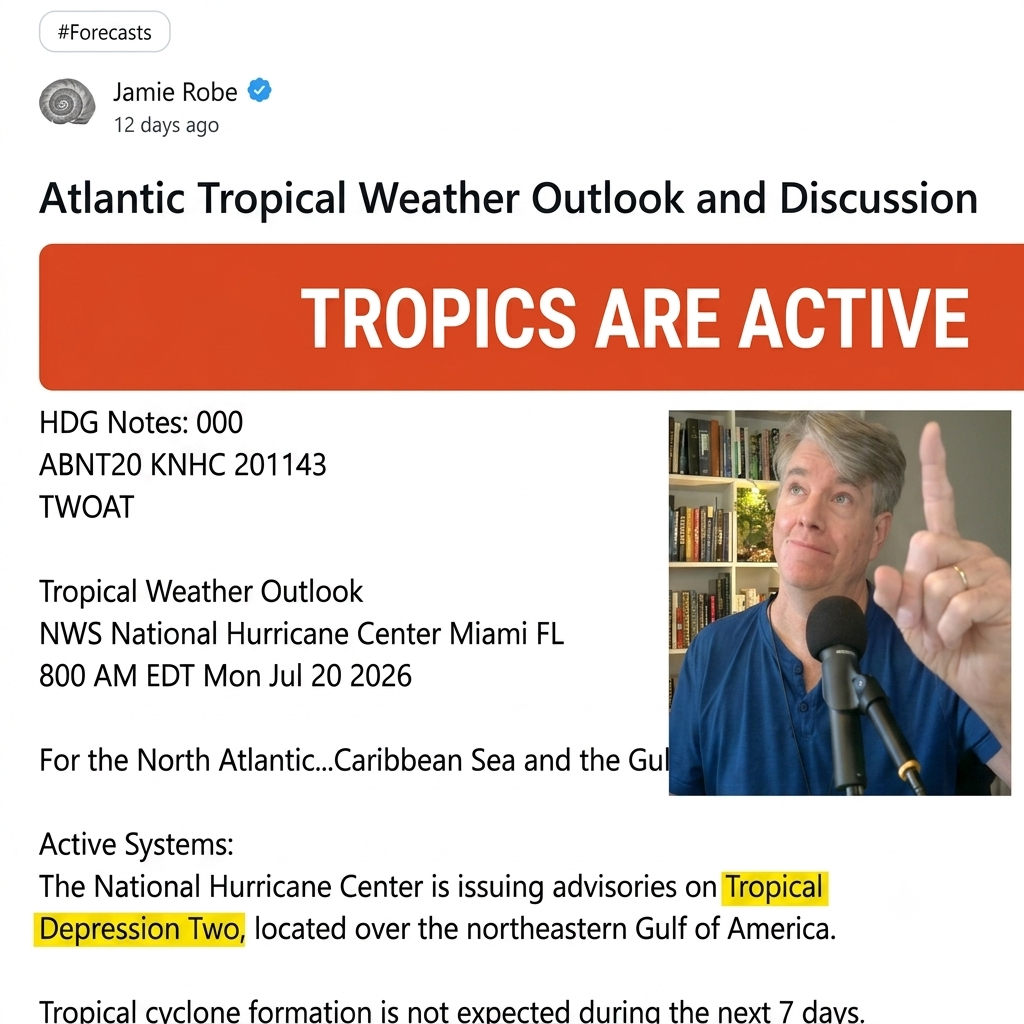
[00:25:08] And I, I think that a lot of, if you, if you've looked at my book or look at the website, you'll see a lot of my stuff is mindset. So we really, really want to, you know, our preparation really starts up here in the way that we're thinking. And we're all going to have emotions. I mean, even when there's like a tropical system forming, say in the Gulf of Mexico or something like that, which just happens to be something out there right now, it gets my attention and even I get nervous. I'm watching that, I'm thinking, oh, gosh, I hope it doesn't get strong and veer our direction or something like that.
[00:25:52] But if you use some logic and also meditation techniques, breathing techniques, you know, I put some stuff in the book and on the website, on the podcast, you know, trying to help people to calm down because we want to make good decisions, not panicky decisions.
[00:26:15] And again, if you, if you can do this before the, the day before a disaster, that's even better. But whatever, you know, you're, if you're caught on a off guard or something like that, you're looking at this podcast years from now. Just try to get calm and try to think of the essential items. You know, it's, it, it's. It can be a big disaster, but also it can be a, a learning experience for you and your family. It, it can bring people together. You know, if you, if you have some water and you have enough for yourself and your family, maybe you can share it with a neighbor who, who totally didn't do anything. You know, it's, it's it's an opportunity for us to help others out there and help ourselves. And by helping ourselves, we relieve some of the stress on the people who are trying to get help. To people who haven't done any preparation. You know, they'll. There will be as soon as possible. There'll be government and nonprofit and churches and all these different groups out there giving out water, giving out tarps, giving out whatever they can to help people.
[00:27:26] And. But those lines can be hours and hours and hours long. And, you know, I'd save that for people who absolutely have no other option but try to. Try to do as much as you can ahead of time.
[00:27:42] Again, stick to the essentials. And also, you know, don't panic. Buy, you know, you're just gonna waste money and, you know, things are going to be in short supply and it's going to be a stressful situation like that. So I hope that this helps some people out there. Again, you can go to the website.
[00:28:06] I've got the.
[00:28:08] You know, I have a lot of things on the website, of course, always welcome to, you know, take a look about what the book's about. It's 1999.
[00:28:17] It has, you know, over 200 pages of ideas and stuff that I've done and friends and mine have done and just lots of information in there.
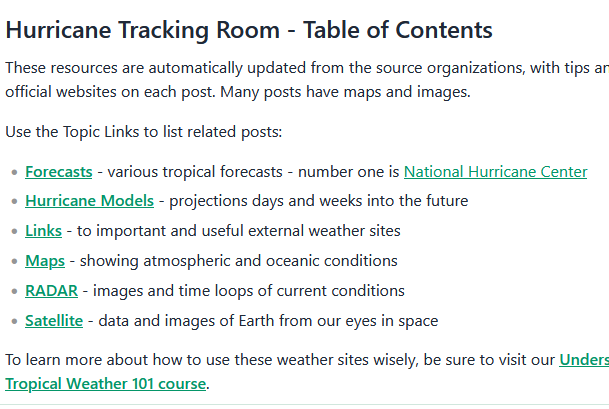
[00:28:26] I have a weather center here that I collect all of the maps and things that I look at all the time. So you can, you know, use this as a resource when you're tracking things. And then we have some free stuff in here, like we have an entire free course on getting Your Hurricane Plan 101, which is, are you going to stay where you are or are you going to get away?
[00:28:53] Again, you follow the official evacuation plans. This is the number one thing you've got to do is decide what is the safe thing for you and your family.
[00:29:06] But again, I encourage you to think about these things and take some action. And it doesn't have to be, you know, thousands of dollars or something. It could be a few dollars spent in a very controlled, logical way or even action that is free to take. So with that, I hope you have a great day and good luck with your preparations.