Episode Transcript
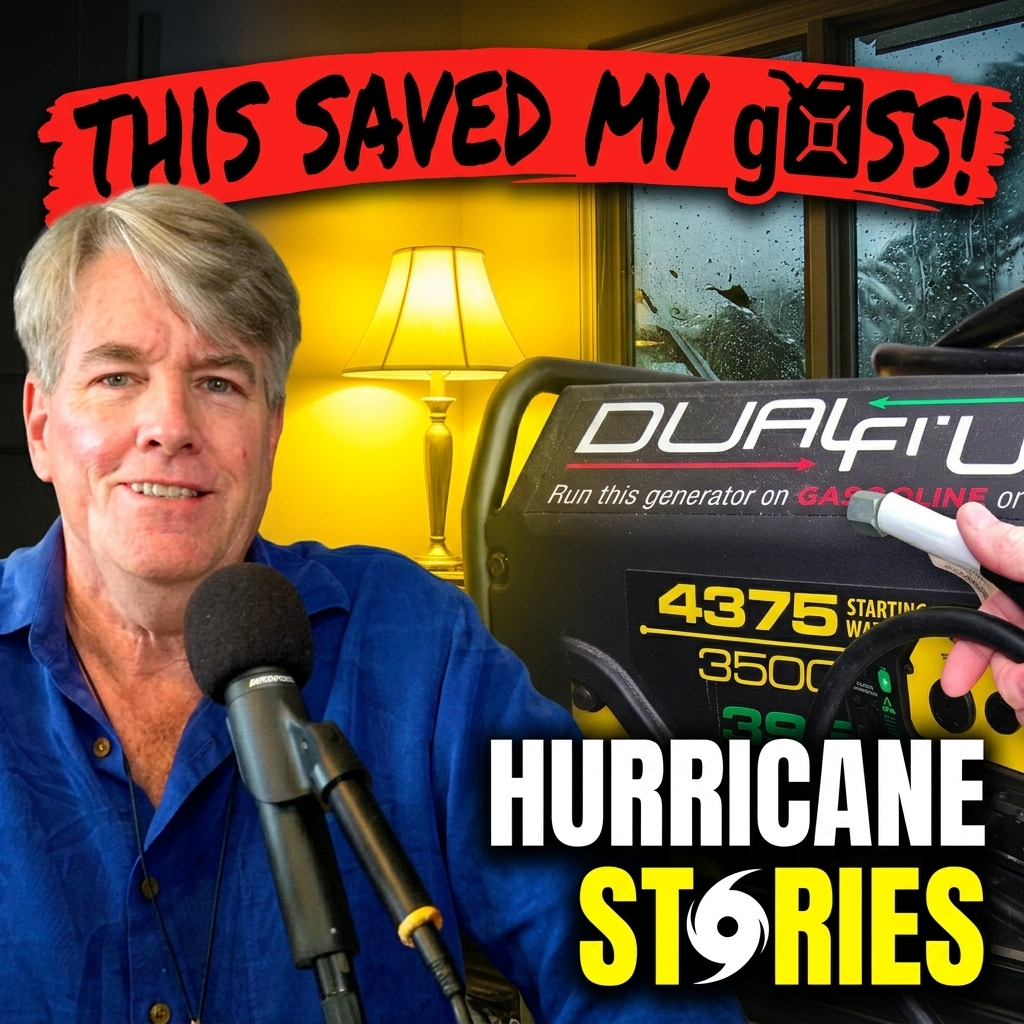
[00:00:01] Welcome, everyone, to the Hunker Down Guide show. I'm your host, Jamie Robe, and I am the author of Day Before Disaster, A Procrastinator's Guide to Hurricane Preparedness. And I have a website that is all about hurricane preparedness called hunkerdownguide.com Anyway, today's show, we're going to talk about something that people ask me about all the time, and it's a very, very big subject. But we're just going to talk about one specific thing here today. We're going to talk about what generator do I like to use.
[00:00:42] Now, if you live in a coastal area in the United States and you have ever gone through a hurricane, you may have lost power. Now, you may lose power even if you're not in the coastal area these days because these strong hurricanes are reaching into the states beyond the coastal areas and dumping rain, having tornadoes, you name it. So in our specific area in. In the Tampa Bay region, we've gone through quite a few storms where we've lost power for up to six days at a time.
[00:01:26] And that's mainly because the winds are knocking down the trees into the power lines, setting things on fire, knocking out the transformers, the transformers. Around here, you can. We all know what it sounds like when a transformer explodes. It is pretty dramatic.
[00:01:46] And then your lights flicker and boom, you're in darkness.
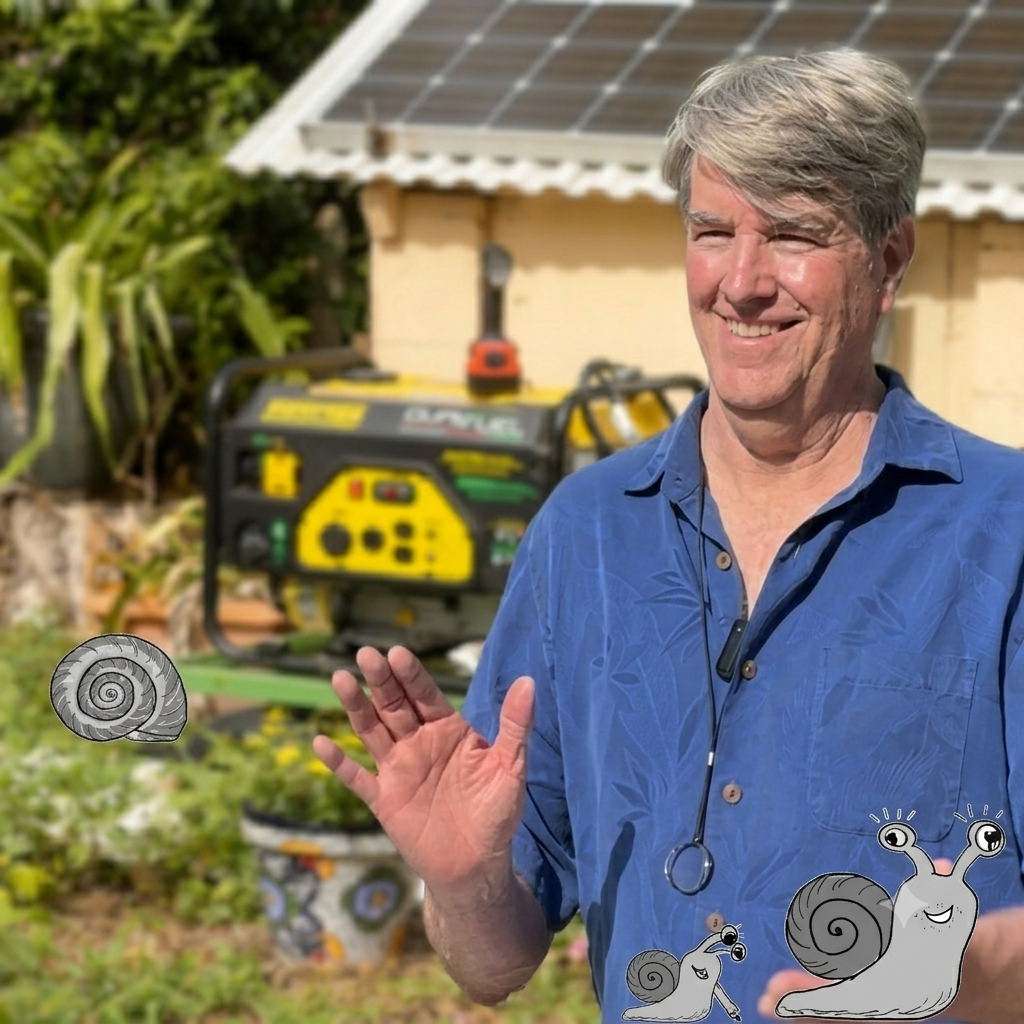
[00:01:51] So it's very important to have some sort of backup power. Now, we're not going to get into, on this episode all of the different things. There are battery backup, things you can create, you can buy. There's solar power. There's just about, you know, a zillion different ways you can, you can get some power into your life. But it is a very important thing. Now, I have had a lot of success with a generator that actually bought quite some time ago. Now, I'm not. I'm not endorsing this brand specifically or I don't even know, you know, if. If they're making this exact model anymore or anything like that. But I did a lot of research at the time, and I really got a fantastic device which has run flawlessly, basically, for, for gosh, I'm saying probably at least seven or eight years.
[00:02:48] So we're going to go through and look at some photos while I kind of narrate about the parts of a generator. Now I'm going to show you the specific one that we use in our family.
[00:03:00] At the time, it was probably in the $200 plus range.
[00:03:08] Now, this generator, this type of generator, it could be a lot More. I've been looking at other generators a lot lately and it is amazing how expensive they are.
[00:03:21] You know, it's just like every other thing. The supply chains, the just the markup for technological devices is huge. So.
[00:03:32] But I. Regardless of the price that you're spending, you've got to think about a couple different things. One is we're talking about generators that use some sort of fuel to create electric power.
[00:03:47] So let's get right into some of our slides here. And you know, this is the specific one that I've used here, this champion global power equipment.
[00:03:59] I'll get to the model number and put it in the show notes. But again, this is an older one. It is a.
[00:04:07] It is a generator that doesn't have any wheels on it. So I usually have it on a rolling cart.
[00:04:14] I store it in the garage. I have stored it into what I call the generator shed that I built. That's another episode that I'll do someday.
[00:04:23] That thing has lasted through every single hurricane we've been hit with. It's an indestructible little cement block shed with a.
[00:04:33] With a very simple roof. And I actually keep all of my propane in there. I keep all my fuel things in there so I don't have to have them in my garage. But this sat there for years. And as long as you keep these things dry and you don't let critters get into them, you're in pretty good shape. But you definitely want to keep this thing protected. So I keep it in the garage. Of course. Never operate it inside. Even inside of garage, you know, you don't want the carbon monoxide fumes to get you. So those are deadly. So let's let us just start going through what is a generator. So this is kind of a frontal view of it.
[00:05:16] Now this. The thing that I really, really wanted and thank goodness that I did it is I wanted a dual fuel generator. Now this one has gasoline or propane as the two different fuels that it uses. I've even seen tri fuel generators where they use natural gas or propane or gasoline.
[00:05:42] There's diesel generators. You see there's a lot on construction sites. I know some people that have diesel generators.
[00:05:49] There are generators that will tap into a tank of fuel. They'll some that will tap directly into the gas lines from like a utility.
[00:06:01] There's a lot of different options out there. I would say if you just go to a regular store on your own, 90% of those in those stores are going to be gasoline only. Now the reason that I wanted a dual fuel is because I did a lot of research and if you run gasoline through any kind of a gas engine, be a lawnmower, a car, whatever, or a generator, it's going to leave residue, it's going to. The, the combustion of the gasoline can leave carbon deposits on the spark plugs, kind of gunk in, in the fuel lines, there's filtering, there's all sorts of things that you have to deal with with gasoline.
[00:06:49] And propane is a very clean fuel. So literally this generator that we're going to talk about, I've never had it conk out on me in all these years and I've done very minimal maintenance work on it, just basically changing oil.
[00:07:09] So when I've inspected it, I just don't see the buildup that I would see in gasoline.
[00:07:15] The other thing about the fuel is you've got to, you got to have it and you got to store it. Okay, so if you have propane tanks and these are the, I'm using the 20 pound white metal there, usually white metal, very heavy duty canisters that you can barely pick, you know, pick one up at a time.
[00:07:44] You'll see exchanges and refueling things at like Lowe's, Home Depot, Ace Hardware, those kinds of places. Other, other places even, you know, other types of discount stores and things have, have really good prices on them. And even like convenience stores sometimes have exchanges and they tend to be more expensive. But you're talking about readily available fuel canisters or exchanges or refueling of your tank.
[00:08:14] And you can store those very safely.
[00:08:19] If you read the studies about propane tanks, they've done a lot of tests and from my understanding, you know, buildings will burn to the ground. But if there's a tank of propane in there, did you not explode gasoline? On the other hand, you're storing it and it has two problems. One is it creates gasoline fumes and if it's not in a ventilated area and it's not done carefully, those can become explosive. Okay. The other thing about gasoline is it goes sour.
[00:08:52] So you won't. Maybe you've, you've had a can of gasoline in some kind of a shed for a lawnmower. A season or so goes by and it, and it's bad, you know, so I don't keep any gasoline at all. I only have the propane.
[00:09:11] Now if you look at this thing, it says starting watts and running watts. And you notice there's two different colors on this thing. You've got.
[00:09:21] This one is higher numbers, so 4375, 4375 starting watts and then running along. You know, this thing is running for hours and hours. It's generating a maximum of 3,500 watts. So that's how much energy you can use from the outlets, different kinds of outlets. And we'll talk about that in a minute. But you can see there's. In the green, they have lower numbers.
[00:09:50] Okay, so what that is, if you're running propane, it is not as explosive of a fuel as gasoline, so it has less energy in it.
[00:10:02] So gasoline can give you some more power.
[00:10:06] Again, there's a trade off with maintenance and reliability, in my opinion, and safety of storage.
[00:10:12] So that is something that to, you know, think about.
[00:10:18] I'm going to switch over so you can see the full screen. We're going to go to the next thing here at the top of this, of this thing. This thing is in a black metal kind of a cage type of thing. So it keeps it. You can grab these things and pick it up.
[00:10:34] Two people easily pick it up. One person. I can move it from one position, lift it up on a cart is heavy. I wouldn't be able to walk around like in the backyard with it too easily. That's why I have carts that, that I put this on.
[00:10:49] But you know, if somebody else, my wife and I can carry it, you know, it's. Two people can grab each. Grab part of it and move it around.
[00:10:59] This is the gas cap that I've never used.
[00:11:03] And you can see there's a vent line probably for the fuel tank in there. So this fuel tank has never had a drop of gasoline in it.
[00:11:12] Now here on the front of it, there's a selector. So right now it's switched to LPG or the propane. And if you're gonna, if you're gonna switch to gas, you flip this over and you can switch to gasoline. So it's one or the other, obviously. So, I mean, I also have this, this, this, this thinking in my head that, you know, in a. If it was really bad and we had to go for longer than the number of days I can sustain, I know I can go, I can go about six days on the propane that I have. We've done that twice, I believe, you know, and.
[00:11:56] But if I had to go longer and I only had gasoline available, you know, siphoning out of vehicles or whatever, you know, that is possible to switch and run this on that. So it does give you a little bit of a safety net. If it's dual fuel but honestly, if my choice was only gas or only propane, I would pick the only propane personally.
[00:12:17] So you can see down at the bottom, there's an, there's a gas, there's a little plastic cover over it, but there's an outlet there and it has instructions and everything.
[00:12:27] And this, you know, is that you get a kind of a regulator tube thing that you screw this end into that outlet and the other end screws into the top of the big, you know, 20 pound gas propane tank.
[00:12:51] So it's pretty easy to hook up and everything. Now in the front of this, this is the energy part. Like how do you tap into what you're, what's you're generating now in this particular unit? Yeah, they're all different.
[00:13:03] But there's a switch for the motor so you can turn on off, you can kill it by switching to off.
[00:13:10] And we'll, I'll show you how we start this one in a minute. There's a gauge that shows you, you know, voltage and such. And then this one has, it has some circuit breakers too, but it also has 120 volt outlets. So just like in any room in your house, this one's got two outlets in here and then it's got 120 volt called L5, 30R.
[00:13:37] So that's a lockable circular thing that you click in and turn it. And it's got the three prongs just like the other ones do. But this one actually kind of locks in and it's used for RVs and applications like this.
[00:13:55] This, it also has this other one which I think is even more common with RVs. It's a TT30R.
[00:14:01] So again, this has, doesn't lock in, but it has three big prongs. And you know, this would be the kind of thing that when someone hooks a trailer or RV of some sort up at a campground there, they may have this or they may have a generator that's running their, their system. So that's basically the thing. The gauge also shows volts, the hertz.
[00:14:26] So it's, it's generating like a 60 Hz signal. And then you know, it, it just gives you a pretty rudimentary thing here. But you know, this, this is great for plugging some things in. If you're, remember you're always running this outside somewhere away from your homes so you're not getting those fumes.
[00:14:47] But you know, you can just turn this on and fire it up and then plug in and you got power. Now these other ones, I happen to use this L5, 30R connection.
[00:14:59] And the.
[00:15:02] We'll switch over here. And you can see underneath, if you look in the back of this panel here is like the inverter device that's being propelled by the gas engine in there.
[00:15:12] It's a very clean and well laid out thing. It's pretty simple. You know, there's a, there's an engine, small engine, and then a device that generates, that spins and generates the power and feeds it into the panel. And here's the bottom of the fuel tank that I never use.
[00:15:30] So it's fairly simplistic. Now, here are some, you know, I just put this up here, you know, dangers about gasoline and flammability and propane and everything. Of course, you definitely want to be, you know, very careful. And it says here, for use in weather protected areas only, do not expose to rain. Now when I say we run it outside, we've actually run this underneath kind of a tent.
[00:16:01] We have this greenhouse tent thing and that In Milton, Hurricane Milton, we were running this in the front yard under this metal framed tent. Tent. And that kept the rain off of everything because. And you could also go inside that thing and tend to it. And it had all the propane tanks in there as well. So it was kind of nice to have a covering. You would have to keep ventilation on this, you know, so you can't have it like sealed in a metal box and run because it has to have air for the engine and exhaust has to come out.
[00:16:40] But, you know, I did build that little shed, and it's very, very small. This could fit in and, and six tanks of propane had two levels in it. So.
[00:16:53] And it has, I put vents all over it, so it could actually run pretty well sealed up from any kind of rain to get into it. I've never again, never had a problem.
[00:17:04] And of course, here's more. This is, I, I cannot emphasize enough.
[00:17:11] Carbon monoxide kills. I mean, it's a silent killer. And even when a storm hits and misses, okay? And I'm talking about, you know, you're, you're, you're 100 miles from where the eye comes in. You'll see people who end up dead because they're running a general generator like this, lose power because trees fell down in their area. Maybe they're out of power only for 24 hours. They fire up a generator inside their living room, or they keep doors and windows open to the running generator right out there and the fumes get in.
[00:17:49] It's just like having a car exhaust running in your garage. And that can kill you. So, you know, we have carbon dioxide, carbon monoxide, excuse me, detectors in our, in our smoke detectors in our house as well.
[00:18:04] So you cannot be too careful when it comes to this kind of thing.
[00:18:09] So let's keep going with our little examination here of this thing.
[00:18:14] Now when you're starting this, there is a choke device on mine. There's not an automatic thing. You have to flip this over to start and then here's a pull. You can see this pull cable right here. And that will fire this thing up. Here's another view of the 224cc Champion motor in there.
[00:18:39] It's very easy to start this. It's like starting a lawnmower except, you know, honestly, maybe pull once or twice. It's not. I've never had it where I've been pulling and pulling, pulling for an hour trying to get the power to start up. I would just be nuts at that point.
[00:18:56] Again, very important to test your generators in the off season or maybe during the season when you don't need it, and make sure that the thing, you know how to operate it and, and that you have the fuel and then it can start and run. Okay, very important to test things out. But again, mine doesn't have an electric start. It doesn't have a starter, electric motor and a battery and all that. And that's why, honestly, this thing is bulletproof because, you know, if you have electric start, it's very easy. You just push that button, you know, starts right up. But what if it doesn't? Then they usually have a pull thing as a fallback or you gotta replace the battery, you gotta maintenance the battery. You know, there's a lot of things that could go wrong, just like a car starter.
[00:19:44] So again, I like, you know, just having the, you know, pull start on this one.
[00:19:55] Now you can see me, I've got this big yellow cable which is actually very, very heavy. It's very, very long. So I can run this thing in the backyard, I can run it in the front yard and I'm going to snake this cable back. And now you're saying, well, why would you do that? Well, I could run extension cords and I've done so in the past from these points here on the front of the generator. But I'm hooking into this special heavy duty connector here, number one. It turns and clicks in there. So it can't just be yanked out by someone tripping on it because you're kind of relying on this thing running your refrigerator and other critical items. So you don't want it to go, go bad here.
[00:20:35] And this is what one of those cables looks like. It's really thick, kind of expensive. If you get a really, really long one. And you'll see in a second why I'm running this cable. Because you can see on the, on the, on the backside, it's got kind of like the same thing that's on the front has this female connector.
[00:20:54] This is the male connector that goes into the front of the generator. So this female connector goes into this thing called a transfer switch. Now, a transfer switch is a device. It's like a little circuit breaker box. And it's, you know, and it's wired into a certain number of your circuits on your main panel. This is my main panel in the garage. You can see a conduit coming through. And this is the, the connector here.
[00:21:25] And the, this is a cover.
[00:21:29] So if we go back to that last picture, when you flip that cover up, I have, I bought a transfer switch that has six circuits.
[00:21:36] So these six circuits are like hooked in parallel or series. I'm not sure the exact terminology, but it's. They, they, they kind of override the, the breakers in the breaker box. And then you can see this thing here, this top part, it says gen off and line.
[00:22:00] Now you can see they're switched down to line. If I switched them to off, there would be no power going to that circuit at all. If I switch to generator, there will only be power if the generator is hooked up to this connector and feeding into this panel. And this is a safe way to hook your generator up to your house. What you don't want to do, and some people do it, they will kind of jury rig and hot wire their, the front of their. Instead of hooking one of these things, they'll hook into this and kind of like hardwire their, their extension cords into say, an outlet and back feed into their house. Now the problem with that is there's no breakers. If there's some kind of an overload, it could cause a fire, it could damage equipment inside your house and sensitive things. So don't do that, do a proper way and get a transfer switch cable and a generator that has that kind of connector on it. And then you can really, really, you know, go forward this thing. And the last thing I'm going to show is this oil. And this is the oil plug in the bottom. And it's very easy to change the oil and check it and stuff. And you don't have to do this a lot, but it's it's, it's just a maintenance thing you need to check on.
[00:23:20] So again, I just want to say, you know, this is just my personal generator that's served our family for a long time and hopefully it keeps going. And I want to, you know, encourage you to take time before a storm and investigate generators and see what would work for you with your budget and your needs. Generators come in all different kinds of sizes. This one will not run a house. It does. It only supplies 120 volt circuits.
[00:23:50] It doesn't do 240 like you would have for a range. It doesn't have the power to run a lot of stuff. But the, this will run a portable air conditioner and some, you know, 1,000 watt microwave. It will run toasters, it will run lights, it will help charge up your phones.
[00:24:09] You know, a main thing we use is the portable H vac unit and that will be another episode too. But, you know, this thing has really helped us many, many times.
[00:24:19] So again, if you want to find out more, you know, I do have a big chapter in the book on generators and solar and battery backups and everything about that. So, you know, if you don't know how to size your, your need, you know, your power needs, I have a whole thing about that on there. So. And, and you can always go onto our website with this podcast and other good free materials and stuff that hopefully will help you in your preparation journey. So with that, I want to say thank you for coming to the show and I hope you are able to get ready before you have any kind of a problem where you never have to use one of these things. But good luck and I'll see you in the next episode.